In 2023, during my junior year of college, I spent ten months as a UX Design intern on Volkswagen’s IECC team.
Automotive UX
Infotainment Design
Interaction Design
User Flows
UI/UX
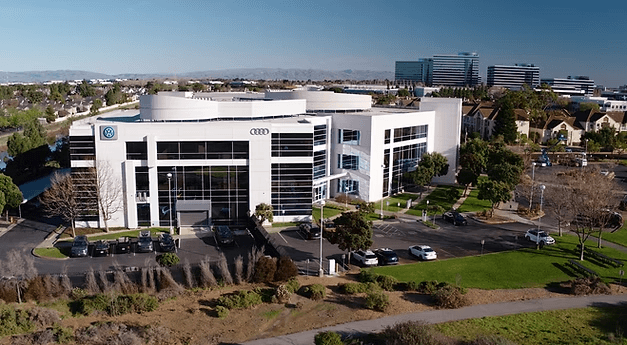
Product Inception and Placement Team (PIP)
I was part of the Product Inception and Placement (PIP) team, a group dedicated to early-stage product development. Our focus was on HMI/UX, Interior, Infotainment, and ADAS, tailoring these elements to cater specifically to the preferences of the U.S. market.
The team's core responsibility was to nurture these products through their initial phases, preparing them for the next stages of development and eventual implementation.
Human-Machine Interface (HMI) Subteam
Within the PIP team, I worked specifically with the HMI subteam. We focused on crafting the user experiences and interfaces for Volkswagen's future vehicles.
Collaborating not just within our team but also on an international scale, we regularly coordinated with colleagues in Germany, Mexico, and across Europe to align our design objectives and projects. The work of our subteam was vital in creating interfaces that ensure intuitive, engaging, and user-centered interactions between drivers and the vehicle's infotainment and ADAS features.
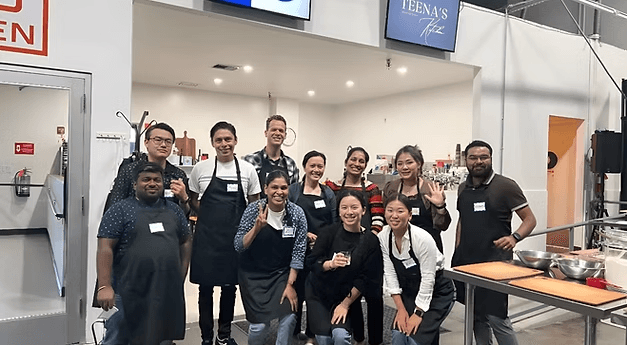
Because my work focused on pre-release software and internal tools, I can only share high-level overviews and a few sanitized visuals. Below are three of the core areas I contributed to during this internship.
1. UX Issue ‘One-Pagers’
The IECC team needed a fast, systematic way to capture UX problems across the infotainment system and turn them into actionable work for design and engineering.
Partnered with three other designers to review production and in-development infotainment flows and surface 100+ UX issues across navigation, media, climate, and settings.
Authored 40+ of the finalized one-pagers, representing a substantial share of the team’s findings as the only intern.
For each issue, created a concise one-page brief that included:
where the problem appeared in the journey,
why it created friction or risk (e.g., discoverability, cognitive load, glanceability while driving),
one or more design recommendations that respected grid, type, and component constraints.
These one-pagers became reference documents for prioritization with product owners and engineers, moving feedback from “this feels off” to specific, implementable changes.
2. Infotainment User Journey Flows
To support faster decision-making, our team needed a clear, up-to-date map of how different features connected across versions and visual modes.
My contributions:
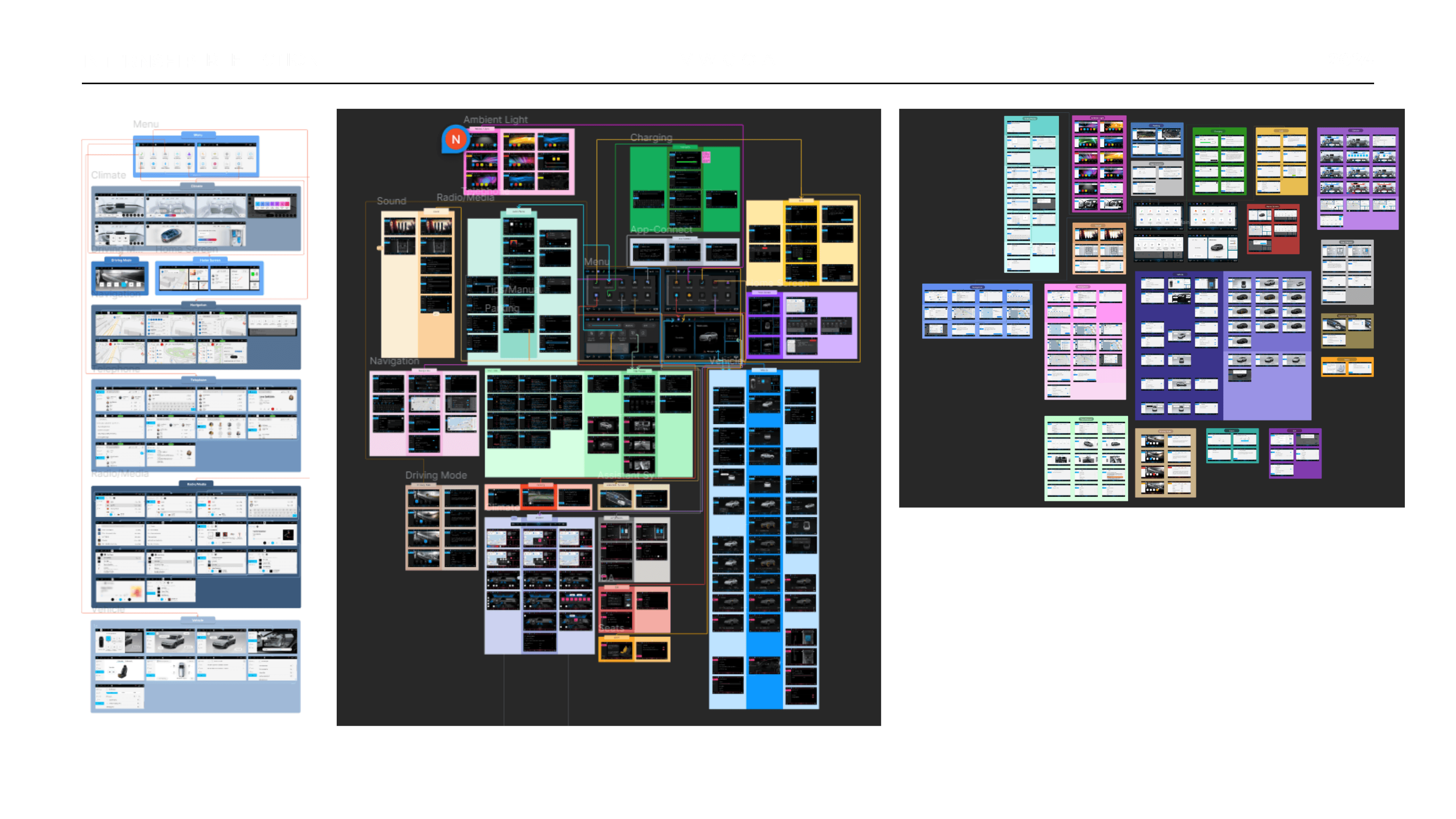
Developed comprehensive user journey flows for key infotainment domains (e.g., climate, navigation, driving modes, ambient lighting).
Captured flows for multiple software versions (OI@A and 1.x) and documented both light and dark modes so designers and engineers could see differences at a glance.
Organized hundreds of screens into structured Figma boards with labeled sections and color-coded areas, making it easy to trace entry points, paths, and edge cases.
Helped eliminate many “car trips” just to check states, stakeholders could review flows directly in Figma instead of going out to vehicles.
This work gave the team a single source of truth for system behavior, supporting the one-pager audits and later concept work.
3. ADAS / PIP Concept Proposal Videos
Later in my internship I created concept proposal videos for Volkswagen’s PIP (Product Innovation / Pilot) team, exploring how to better communicate ADAS features inside the vehicle.
My contributions:
Designed conceptual UI states and motion flows that explain features like Adaptive Cruise, Front Assist, Lane Assistance, and Blind Spot Monitoring.
Assembled short proposal videos combining UI, motion, and narrative, presented to the PIP team to simplify mental models around driver assistance, reduce reliance on dense text, and create a more intuitive, glanceable explanation of what the car is doing and why.
These were conceptual explorations (not final production assets), but they sparked productive cross-functional discussions about future ADAS education feeling more visual, trustworthy, and driver-centric.
